

Why We Raise Mangalitsa × Old Spot Hogs

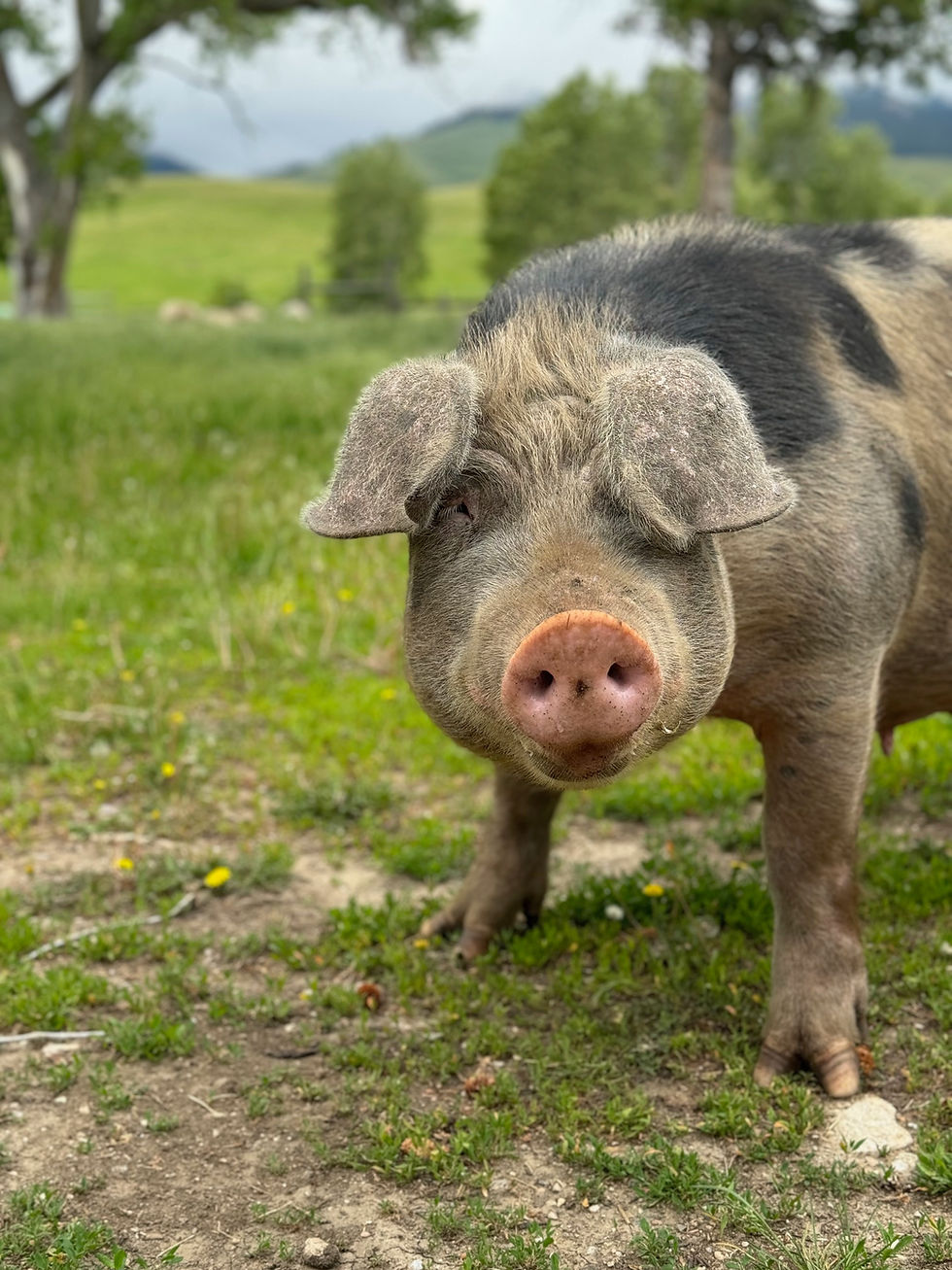
A breed choice is a farm-management decision long before it becomes a flavor decision. At Big Horn Mountain Farms, we raise Mangalitsa × Gloucestershire Old Spot hogs because the cross fits the kind of pork we want to produce and the outdoor system in which we raise it.
This is not a claim that one breed or cross is automatically best for every farm. Climate, facilities, feed, processing goals and customer preferences all matter. Our cross is a practical match for our farm in Buffalo, Wyoming, where we value sound animals, pasture access, useful fat and pork that rewards patient cooking.
What Mangalitsa contributes
Mangalitsa, also spelled Mangalica or Mangalitza, is a Hungarian heritage pig recognized for its curly coat and its history as a lard-type breed. Compared with modern commercial lines selected primarily for rapid production of very lean pork, Mangalitsa is known for carrying more fat.
That fat is useful, not incidental. It can contribute richness and moisture to chops, roasts, sausage and slow-cooked cuts. Separate fat can also be rendered into lard for cooking and baking. The exact amount of marbling and backfat still varies by animal, feed, age, season and finishing conditions; a breed name is never a guarantee that every chop will look identical.
What the Old Spot side contributes
The Gloucestershire Old Spot is an English heritage breed, traditionally white with clearly defined black spots. Breed organizations and The Livestock Conservancy describe Old Spots as hardy outdoor pigs with a calm disposition—valuable qualities when animals are handled regularly and raised with access to pasture.
Old Spot genetics also support the practical side of a farm pork program. Temperament, mothering ability, structural soundness and adaptability all matter in a working herd. Meat quality is important, but the animal must first fit the environment and management system.
Why use a cross instead of a single breed?
Crossbreeding lets a farm combine useful traits from two parent breeds. Our goal is to pair the fat and eating-quality reputation of Mangalitsa with the outdoor hardiness and practical qualities associated with Gloucestershire Old Spots.
A cross is not a new standardized breed, and the offspring are not exact copies of one another. Some hogs may resemble one side of the cross more strongly than the other. We watch the animals in front of us and make breeding and management decisions from real performance, not from a label alone.
Pasture is part of the system, not the whole ration
Our hogs have access to pasture, where they graze, root, explore and express natural behavior. Pigs are omnivores, however, and pasture by itself is not normally a complete ration. They also need balanced feed, minerals and dependable clean water to support growth and health.
That distinction matters. “Pasture-raised” describes how animals live and use the land; it should not be mistaken for “grass-fed” in the way that term is used for cattle. We pair pasture access with appropriate nutrition and active management.
A whole-animal approach
Heritage-style hogs make it especially worthwhile to think beyond chops and bacon. Shoulder, ham, ribs, jowl and ground pork all have distinct uses. Bones make stock, hocks enrich beans and braises, and leaf fat or backfat can be rendered for different kitchen jobs.
Using more of the animal respects the work invested in raising it and gives customers a wider range of flavors and cooking methods. It is also one reason bulk pork and a thoughtful cut sheet can be such a good fit for this kind of hog.
Why it fits Big Horn Mountain Farms
We chose Mangalitsa × Old Spot hogs because they align with our goals: animals suited to outdoor life, pork with character, and a carcass that offers value from nose to tail. We raise them without added hormones or routine antibiotics and use regenerative practices that match animal impact to the condition of the land.
The result begins with genetics, but genetics are only the beginning. Feed, water, handling, pasture rotation, weather, harvest timing, processing and cooking all shape the final experience. Good pork is the product of the entire system.
Shop the Cuts Mentioned
Explore the matching Big Horn Mountain Farms product listings below. Availability changes with freezer inventory.
Sources and further reading
The Livestock Conservancy, Gloucestershire Old Spot Pig.
British Pig Association, Gloucestershire Old Spot breed information.


Comments