

Grass-Finished vs. Grain-Finished Beef: What Does Nutrition Research Actually Say?

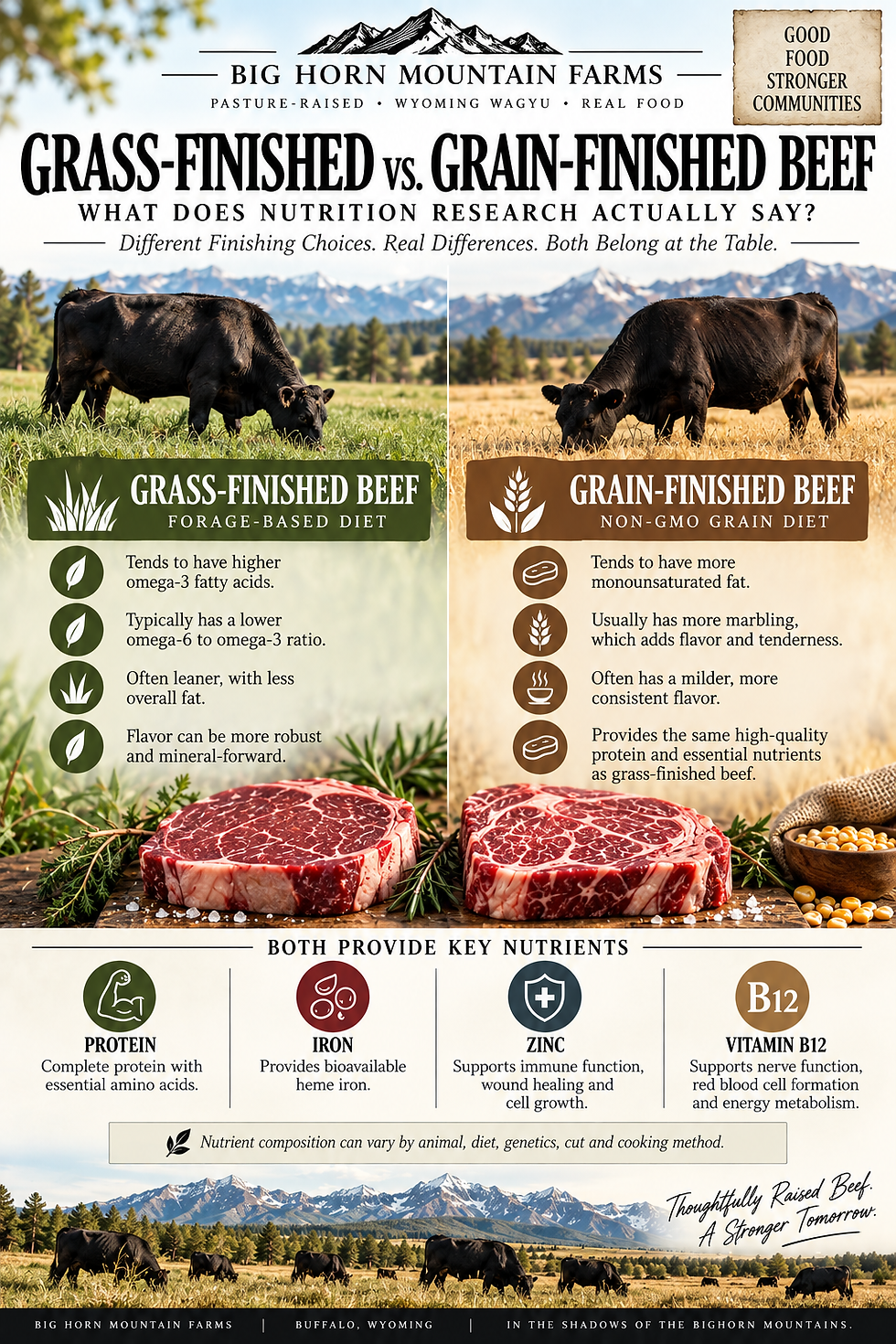
Grass-finished and grain-finished beef are often presented as nutritional opposites. The research is more nuanced. Both can provide high-quality protein, iron, zinc and vitamin B12, while finishing system can influence parts of the fatty-acid profile.
What Can Differ?
Studies comparing finishing systems have found differences in fatty-acid composition. Grass-finished beef often contains higher proportions of certain omega-3 fatty acids, while grain finishing can produce a different overall fat profile. The size of those differences varies with genetics, forage, feed, season, cut and other production factors.
What Those Differences Do Not Prove
A difference in fatty-acid composition does not automatically mean one type of beef produces a specific health outcome. Nutrition research distinguishes between measuring nutrients in a food and demonstrating long-term effects in people. Individual diet, portion size and overall eating pattern remain important.
Both Are Still Beef
Regardless of finishing system, beef can contribute complete protein, iron, zinc and vitamin B12.
Total fat and saturated fat also vary considerably by cut and trimming, so comparing a lean cut with a fattier cut can sometimes matter as much as the finishing label.
What We Offer at Big Horn Mountain Farms
Our cattle are raised on pasture in Wyoming. By-the-cut Wyoming Wagyu is finished with non-GMO grain. Bulk customers can choose either non-GMO grain-finished or 100% grass-finished beef. We offer both because customers have different preferences—not because we need to declare one universally superior.


Comments